Antimicrobials, used in many foods and recognised in general under the additives category, are substances added with the purpose of prolonging the shelf life of food and increasing food safety guarantees. They have the functionality of either inhibiting the growth of microorganisms such as bacteria, molds, yeasts, and fungi, in which case they are named bacteriostatic agents, or they can have a killing effect on these microorganisms, in which case we call them bactericidal.
It is worth distinguishing antimicrobial additives from other categories in food production. An additive is deliberately added to the final product and remains present in it, while a processing aid is used during manufacturing without an intended technological effect in the finished food, and an ingredient contributes to composition, taste, or nutritional profile rather than to microbial stability. Antimicrobial additives sit at a specific point in the food processing chain, introduced to protect the product once formulated, alongside formulation, processing, and packaging choices rather than in place of them.
Why antimicrobial additives are used in food
By this action, antimicrobial food additives help prevent spoilage of food and reduce the risk of foodborne illness. Their use responds to several needs that food manufacturers face at once: protection against microbial growth throughout a product's shelf life, extension of that shelf life to support distribution and retail timelines, and maintenance of food safety and product consistency batch after batch. Their use is also a response to industrial requirements, as manufacturers must guarantee a stable, safe product while meeting cost, labelling, and process constraints that vary by category and by market.
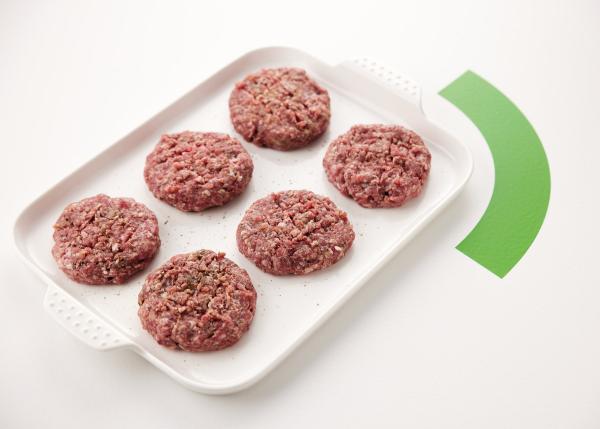
In practice, this means extending shelf life by slowing spoilage, improving food safety by reducing harmful pathogens, and maintaining food quality, including taste, texture, and appearance. This includes preventing mold and yeast growth in baked goods or controlling bacterial growth in processed meats, dairy, beverages, sauces, and ready-to-eat foods. Common examples include lactates and acetates in emulsified meats, used to inhibit bacterial growth and prevent spoilage; nitrites in cured meats, used to prevent the growth of Clostridium botulinum; and natamycin in cheese, used to prevent mold growth.
How antimicrobial food additives work
General modes of antimicrobial action
Antimicrobial food additives act through a limited number of general mechanisms, regardless of the specific compound used. Most work by inhibiting the growth of microorganisms, slowing reproduction so that spoilage organisms or pathogens cannot reach levels that compromise safety or quality within the intended shelf life. Others limit the risk of contamination taking hold in the first place, reducing the ability of surviving microorganisms to establish and spread within the food matrix.
A further mode of action relates to stabilization of the food matrix itself, by affecting conditions such as available moisture, pH, or access to nutrients that microorganisms need to grow. In this sense, their role is as much about supporting the overall stability of a formulation as about targeting any single organism.
Safety considerations and industry standards
Antimicrobial food additives are strictly regulated by national and international food safety authorities, including the U.S. Food and Drug Administration (FDA), the European Food Safety Authority (EFSA), and the World Health Organization (WHO). These agencies evaluate scientific safety data, establish maximum permitted levels, monitor ongoing research, and prescribe required labelling.
In general, antimicrobial food additives are considered safe when used as approved. Lactates and acetates have registered E-numbers, for example, prescribing their production, composition, and use, but without a maximum limit. In the US, these are generally recognised as safe (GRAS). For some other antimicrobial agents, such as nitrites, nisin, and natamycin, regulations describe approved limits and the applications in which their use is allowed; before approval, these must undergo toxicological testing, evaluation of long-term health effects, and determination of acceptable daily intake (ADI) levels.
Dosage and use conditions therefore matter: excessive consumption or misuse could pose risks, and high intake of nitrites has been linked to potential health concerns. Regulations here and there are starting to consider further limiting or completely prohibiting the use of nitrites, as in France, for example. This places responsibility on manufacturers to stay current with permitted levels and applications, and to select and dose antimicrobial additives accordingly.
Antimicrobial food additives vs other antimicrobial solutions
Antimicrobial additives are one lever among several available to manufacturers seeking to protect a product against microbial risk. They differ from antimicrobial ingredients, which may bring a functional or clean-label benefit alongside their protective effect, and from broader antimicrobial solutions, which combine several agents into a single formulation for a specific application. They are also distinct from preservation methods such as heat treatment or modified atmosphere packaging, which act on the physical environment of the product rather than through an added substance.
Choosing the right combination for a given food matrix, microorganism profile, and regulatory context is where the practical work begins, and it is the focus of the other pages in this series.
Navigating the realm of antimicrobial additives for food can be a tedious matter, considering the food matrix being used, the microorganisms in play, the allowed additives, dosages, and labelling. Galactic approaches these questions with a scientific and technical lens, helping food manufacturers understand how a given antimicrobial additive behaves within their system and how it can be evaluated and dosed appropriately. To support food manufacturers on these matters, we have a team of experts at Galactic ready to guide you to the right antimicrobial to solve your challenges. Please contact us today to find your solution.
Antimicrobial food additives are a foundational component of modern food safety, contributing directly to the stability, safety, and quality assurance of the products we eat every day. Their strategic position within the broader ecosystem of food preservation means they rarely act alone: they work alongside antimicrobial agents, ingredients, solutions, and preservation methods, each addressing a different part of the challenge in keeping food safe from formulation through to the point of consumption.

Still have questions?
Can’t find the answer you’re looking for?
Contact us for expert advice and support!