Latest articles

Natural Antimicrobial Agents in Food Preservation
Natural antimicrobials are no longer a niche formulation choice, they're a growing part of mainstream preservation strategy. But there's no single "strongest" natural antimicrobial. We break down the main categories, from microbially derived compounds to plant and animal-based options, how each works to inhibit spoilage and pathogens, and why building an effective strategy depends on system-level design rather than picking one ingredient.
Read more
Antimicrobial technologies for food safety
From temperature control to bio-based innovations, antimicrobial technologies form the backbone of modern food safety strategies. This article walks through the main categories, their real-world applications, and the factors that determine how effective they are across different food matrices.
Read more

How can antimicrobial formulations be optimized for cost and efficacy in food systems?
Cost-effective antimicrobial formulation isn't about picking the cheapest ingredient, it's about achieving the lowest cost per unit of microbial stability. We explore how dose-response curves, synergy between mechanisms, and product environment factors like pH and water activity can be leveraged to optimize efficacy, including real data from a vinegar-based system that extended shelf-life in refrigerated beef patties at just 1.3% inclusion.
Read more
Can we combine age-old knowledge on green tea with modern techniques for food freshness?
Green tea's benefits have been documented for over a thousand years, but unlocking them for modern food applications is a different challenge. Discover how Galactic's patented water-based infusion technology extracts green tea's water-soluble actives, catechins, L-theanine, and more, without solvents, offering a clean-label route to both flavor and natural protection.
Read more
What defines an antimicrobial efficacy test?
An antimicrobial that performs well in a petri dish doesn't guarantee it will work in a finished product. We walk through how R&D teams evaluate antimicrobial performance step by step, from in vitro screening and MIC testing to challenge tests in real food matrices and full shelf-life validation, and why context, not a single test result, ultimately determines whether an antimicrobial strategy holds up under real conditions.
Read more

Regulatory Framework for Food Preservatives and Antimicrobial Additives: A Global Overview
Food preservative regulation varies significantly across regions, from the FDA's GRAS pathway to the EU's positive list system and the Codex Alimentarius' global standards. This article outlines the key frameworks, approval mechanisms, and emerging trends, including clean label and antimicrobial resistance, shaping the regulation of antimicrobial food additives today.
Read more
Antimicrobial protection for food products : approaches, challenges and safety
Microbial contamination poses a major challenge for food manufacturers. The WHO reports that foodborne illnesses affect millions of people each year, leading to economic losses and public health issues. Antimicrobial protection helps mitigate these risks by controlling harmful microorganisms. Explore antimicrobial protection strategies to extend shelf-life and comply with standards.
Read more

How to quickly determine if an antimicrobial is effective against spoilage microorganisms?
Not every antimicrobial screening method needs to take weeks. Alain, Galactic's Food Application R&D Manager, explains how a rapid turbidity-based in vitro technique can reveal a preservative's inhibitory efficacy against spoilage and pathogen surrogate strains in under 48 hours, with real MIC data on Listeria innocua and E. coli K-12 using Galimax Flavor V-50. Discover how this method helps guide faster, smarter formulation decisions.
Read more
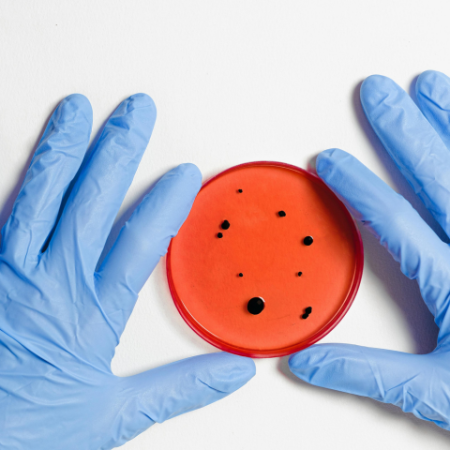
What Are Antimicrobial Food Additives? Definition, Role and Regulatory Overview
Antimicrobial food additives are essential for extending shelf life and preventing foodborne illness, but understanding what they are, how they work, and how they're regulated is often the missing first step. This article breaks down the definition, mechanisms, and safety framework behind antimicrobial food additives, and shows where they fit among the other tools manufacturers use to keep food safe.
Read more
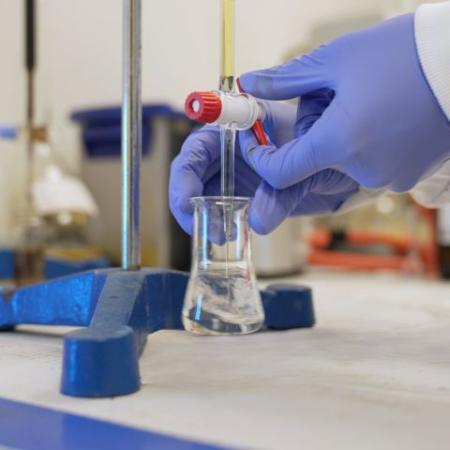
What does antimicrobial formulation optimization really mean for food R&D teams?
An antimicrobial that performs well in the lab doesn't always deliver the same results once it's in a real food product. Between protein and fat interactions, pH, and ionic strength, antimicrobial efficacy is ultimately a formulation-level challenge, not just an ingredient choice. We unpack the interaction effects, the methodologies (challenge testing, design of experiments) R&D teams rely on, and the formulation constraints that shape robust, reproducible antimicrobial performance.
Read more
Page 1 of 8